
In the early twentieth century, the Republic of Liberia occupied a paradoxical position in global politics. Founded by freed African Americans and recognized as an independent Black republic, the governing Americo-Liberian elite replicated many of the coercive, extractive structures of European colonialism against the country’s indigenous majority. Nowhere was this internal stratification more acute than along the southeastern Kru Coast. Between 1931 and 1936, this systemic friction erupted into the Sasstown War—a protracted guerrilla conflict led by the Jlao Kru against the Liberian Frontier Force (LFF). Though frequently overshadowed in broader regional histories, the war represented a decisive struggle over indigenous autonomy, international accountability, and the limits of state sovereignty in interwar Africa.
The Fernando Po Crisis and the League of Nations Investigation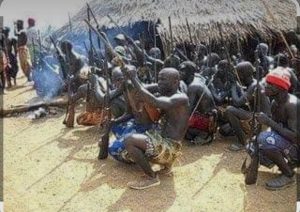
The immediate catalyst of the Sasstown War lay in the international scandal surrounding Liberia’s labor recruitment practices in the late 1920s. Facing severe fiscal deficits, high-ranking Liberian officials—including Vice President Allen N. Yancy—facilitated the coercive shipment of indigenous laborers, predominantly Grebo and Kru men, to Spanish cocoa plantations on the island of Fernando Po (present-day Bioko).
In 1930, mounting international pressure compelled the Liberian government to permit an independent investigation by the League of Nations, chaired by British physician Dr. Cuthbert Christy. As the Christy Commission traveled along the southeastern coast, local leaders and villagers came forward to provide damning primary testimony. Testimonies documented systematic abuses by the LFF and district commissioners, including:
- Coercive Recruitment: Armed soldiers raided coastal villages, seizing young men and holding village elders hostage until labor quotas were met.
- Punitive Taxation and Extortion: Indigenous communities were subjected to arbitrary hut taxes, forced road construction without compensation, and the confiscation of livestock and rice harvests.
- Physical Reprisals: Witnesses testified to public floggings, prolonged detention in stockades, and the burning of homes when communities failed to meet administrative demands.
The resulting Christy Report (September 1930) corroborated allegations of conditions “hardly distinguishable from organized slave trade,” forcing the resignations of both President Charles D. B. King and Vice President Yancy. However, while the international community focused on executive reform in Monrovia, the indigenous witnesses who had testified in good faith were left entirely unprotected from state retaliation.
Outbreak of Hostilities and the Shadow of 1915
Following the departure of the League commission, LFF detachments and local officials launched punitive raids against communities that had cooperated with the investigators, particularly in the Sasstown territory. In response, the Jlao Kru initiated a coordinated campaign of civil disobedience, refusing to pay taxes or supply forced labor.
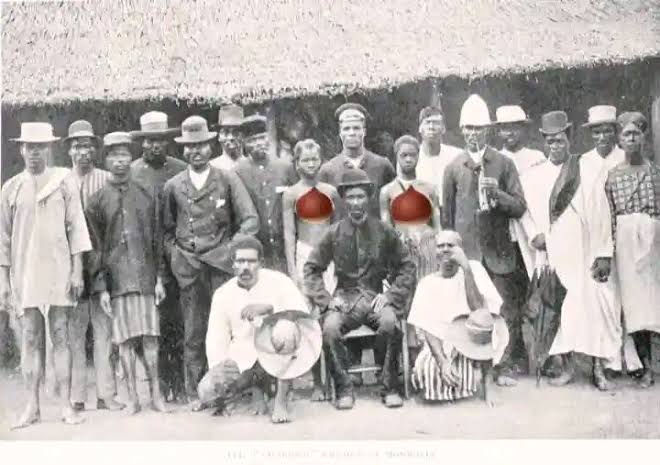
Attempts by incoming President Edwin J. Barclay to negotiate a settlement collapsed under the weight of profound historical distrust. Just fifteen years earlier, during the Kru Coast Revolt of 1915–1916, Monrovia had invited Kru chiefs to peace talks in Sinoe under a flag of truce, only to arrest and execute dozens of them. Determined not to repeat this tragedy, the Sasstown leadership rejected Barclay’s summons to Monrovia. By November 1931, diplomatic deadlock gave way to open warfare when LFF troops under Colonel T. Elwood Davis attacked Sasstown positions, initiating a five-year military campaign.
The brutal military campaign against Chief Juah Nimley and the Sasstown Kru was carried out by the Liberian Frontier Force (LFF). The force was commanded by Colonel T. Elwood Davis, who was an African American and a former U.S. Army officer. After leaving the United States, Davis moved to Liberia and became an aide-de-camp and Special Commissioner for the Americo-Liberian government. Though he had American military training, he was acting strictly as an officer of the Liberian state, not under the direction of the U.S. military.
Key Figures: Senyon Juah Nimley and Didhwo Twe
The resistance was anchored by two distinct yet complementary figures representing traditional authority and Western-educated nationalism:
Paramount Chief Senyon Juah Nimley
As the Paramount Chief of the Jlao Kru, Senyon Juah Nimley—affectionately known among his people as “Wonderful Nimley”—served as the military and spiritual commander of the uprising. Operating from fortified forest camps after coastal towns were abandoned, Nimley demonstrated remarkable tactical adaptability. Recognizing that his forces could not match the modern rifles and machine guns of the LFF in open battle, he organized decentralized guerrilla units that ambushed supply lines, disrupted communications, and sustained morale across five years of siege. Nimley also engaged in sophisticated transnational diplomacy, dispatching written appeals through sympathetic missionaries and British colonial officials in neighboring Sierra Leone to petition the League of Nations for intervention.
Didhwo Twe
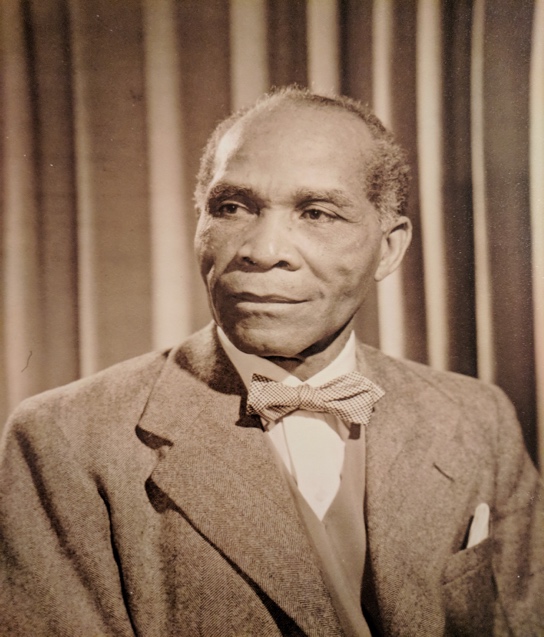
While Nimley led the armed resistance in the interior, Didhwo Twe (1879–1961) articulated the political grievances of the Kru on the national and international stage. Educated in the United States at St. Johnsbury Academy and Rhode Island State College (now the University of Rhode Island), Twe was the first indigenous Kru elected to the Liberian House of Representatives in 1927. After introducing legislation to abolish forced labor, he was expelled from the legislature and became a relentless critic of the Barclay administration. President Barclay explicitly accused Twe of instigating and financing the Sasstown rebellion from exile in Sierra Leone. Although Twe maintained that the uprising was an organic response to state brutality, his advocacy provided the Kru struggle with a potent ideological framework rooted in constitutional equality and indigenous human rights.
Unable to achieve a swift military victory in the dense rainforests of the southeast, the Barclay administration adopted a deliberate strategy of attrition and scorched-earth warfare. Between 1931 and 1936, LFF forces systematically burned over forty Sasstown villages, destroyed cassava and rice farms, and blockaded coastal trade routes to prevent food and ammunition from reaching the interior.
The humanitarian toll was catastrophic. Between 12,000 and 15,000 Jlao Kru civilians were displaced into the bush, where exposure, disease, and acute famine claimed thousands of lives. Simultaneously, President Barclay successfully neutralized external diplomatic pressure. By framing the conflict as a purely domestic rebellion against a sovereign Black nation, Barclay deterred the League of Nations and European powers from intervening militarily, effectively isolating the Kru resistance.
Resolution and Historical Legacy
By mid-1936, prolonged starvation and continuous military pressure exhausted the capacity of the Jlao Kru to sustain armed resistance. In August 1936, Chief Juah Nimley and his remaining commanders surrendered to government forces. Nimley was transported to Monrovia and subsequently exiled to Gbarnga in the central interior. Although President Barclay granted him a formal pardon in 1937, the aging chief died shortly thereafter, his health broken by years of hardship and displacement.
In the short term, the conclusion of the Sasstown War marked the definitive consolidation of Monrovia’s administrative control over southeastern Liberia, ending decades of semi-autonomous resistance along the Kru Coast. Yet in the long arc of Liberian history, the conflict carried enduring significance. It exposed the contradictions of state-building in post-abolition West Africa and laid the intellectual and moral groundwork for future indigenous political mobilization, culminating in Didhwo Twe’s historic 1951 presidential campaign against the True Whig Party. Today, Senyon Juah Nimley remains venerated in Kru oral tradition and Liberian historical memory as an uncompromising defender of human dignity and self-determination.
Why Honest War Education Matters
- Recognizing warning signs early. Studying the root causes of past conflicts teaches students to spot propaganda, dehumanization, and diplomatic failures before they escalate into violence.
- Acknowledging generational trauma. Wars leave deep psychological and social scars that pass down through families. Openly discussing these impacts validates the suffering of affected communities and fosters lasting reconciliation.
- Building civic accountability. Teaching young people how and why leaders made critical mistakes encourages healthy skepticism and responsible citizenship. Students learn that national loyalty includes holding institutions accountable.
- Cultivating empathy across divides. Examining conflicts from multiple viewpoints helps students understand the human cost of war on all sides, reducing prejudice and polarization.
Sadly, the Sasstown War (1931–1936) remains one of the most consequential yet underexamined internal conflicts in West African history. Fought between the indigenous Jlao Kru people of southeastern Liberia and the Americo-Liberian central administration in Monrovia, the five-year conflict emerged directly from the 1930 League of Nations International Commission of Inquiry into forced labor. Led by Paramount Chief Senyon Juah Nimley and ideologically connected to Kru statesman Didhwo Twe, the rebellion challenged the extractive administrative practices of the Liberian state. Despite inflicting severe humanitarian devastation on the Kru coast, the war consolidated Monrovia’s territorial hegemony while cementing Juah Nimley’s legacy as a symbol of indigenous anti-colonial resistance.
Including the Sasstown War (1931–1936) in Liberian high school and university curricula offers critical context for understanding modern national identity, human rights, and governance. While the Liberia National History Curriculum covers recent conflicts like the 1980 coup and the 1989–2003 civil wars, earlier internal resistances—such as the Sasstown War—are often overlooked in standard classroom.
Indeed, true national healing requires confronting the full, unvarnished truth of past wars rather than hiding uncomfortable facts from the classroom. When a society educates its youth on both its triumphs and its failures, it builds collective resilience and breaks the cycle of recurring conflict.
Selected Bibliography for Further Reading
- Akpan, M. B. “Black Imperialism: Americo-Liberian Rule over the African Peoples of Liberia, 1841–1964.” Canadian Journal of African Studies, vol. 7, no. 2, 1973, pp. 217–236.
- Davis, Ronald W. Ethnohistorical Studies on the Kru Coast. Liberian Studies Association in America, 1976.
- League of Nations. Report of the International Commission of Inquiry into the Existence of Slavery and Forced Labor in the Republic of Liberia (The Christy Report). Geneva, 1930.
- Sundiata, Ibrahim K. Brothers and Strangers: Black Zion, Black Slavery, 1914–1940. Duke University Press, 2003.
The Author: Mr. Edmund Zar-Zar Bargblor

MR. Edmund Zar-Zar Bargblor is a distinguished Liberian educator, author, and public servant known for his work in mathematics education and his writings on African governance and social issues. Awards and Recognition: In March 2025, he received the West Africa Intellectuals Award from the West Africa Intellectual Organization (WAIO) in Accra, Ghana, for his articles on African governance, corruption, and economic development. He is a former Deputy Managing Director of the National Port Authority of Liberia.
Other articles by Mr. Edmund Zar-Zar Bargblor