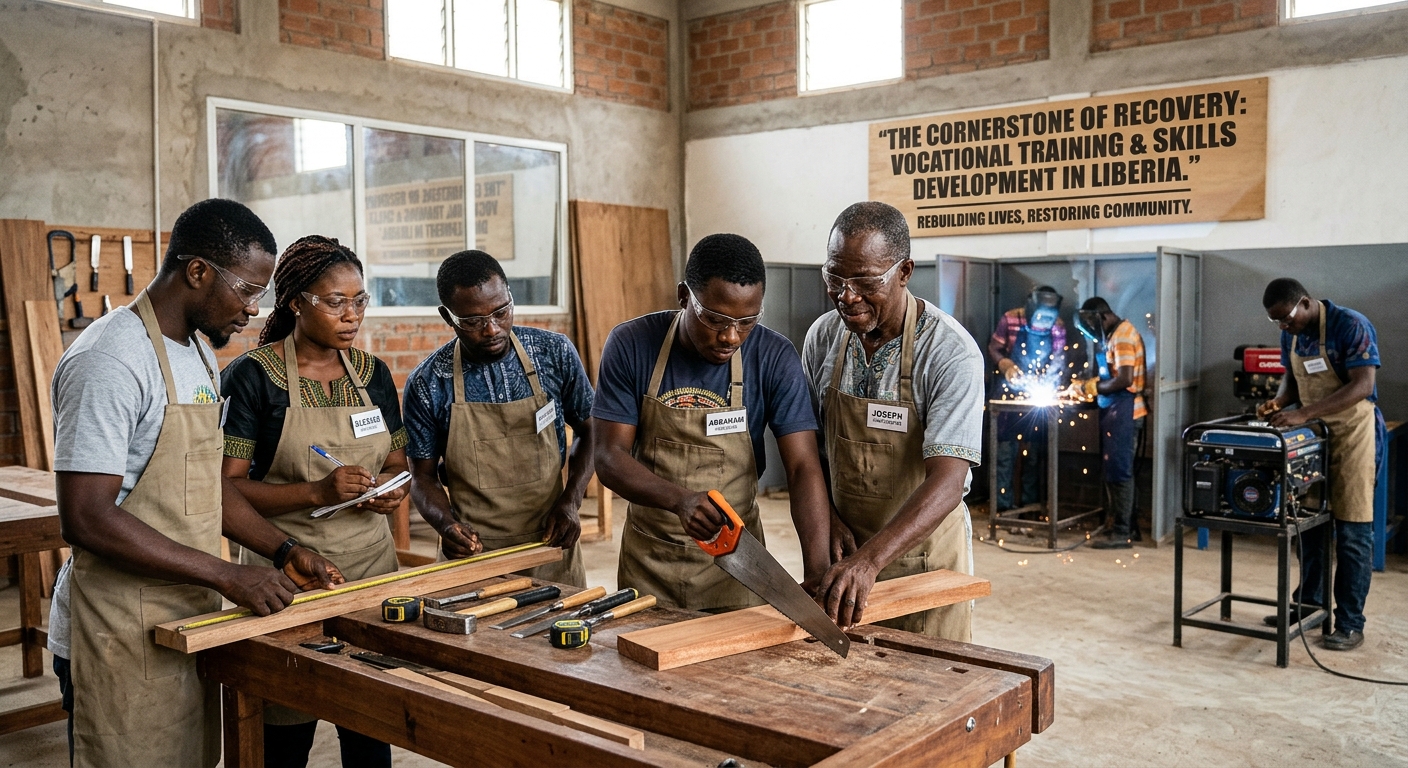

For decades, Liberia’s economic narrative has been a paradox of rich natural resources shadowed by deep structural vulnerabilities. Despite vast reserves of iron ore, timber, and rubber, the nation has frequently struggled to convert its primary resources into sustainable domestic wealth. At the heart of this challenge sits a profound systemic barrier: the skills gap. With youth between the ages of 15 and 34 making up over a third of the population, Liberia possesses a massive potential demographic dividend. However, traditional formal education has often left graduates disconnected from actual marketplace needs.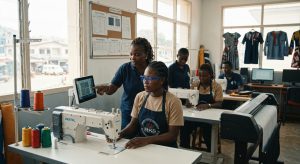
This raises a vital structural question: Is targeted, practical skills-based Technical and Vocational Education and Training (TVET) the primary driver of Liberia’s economic resilience, industrial development, and social stability?
The growing consensus among policymakers, international partners, and economists points to an unequivocal yes. Without a deliberate pivot toward marketplace-driven technical training, macro-level investments will continue to bypass the domestic workforce.
- Catalyzing Economic Resilience Against Macro-Shocks
A diversified, skilled workforce acts as a buffer against global market volatility and domestic crises. Liberia’s economy has historically been hyper-dependent on raw commodity exports, exposing it severely to global price fluctuations, not to mention the historic economic shocks of the Ebola and Covid-19 crises.
Targeted TVET builds resilience by shifting reliance from informal, low-productivity jobs to localized supply chains. Under initiatives like the government’s National Development Plan, expanding vocational pathways equips citizens to build self-sustaining ecosystems. When young Liberians are trained in modern agronomy, food processing, or electrical maintenance, they don’t just fill jobs—they insulate their communities by producing localized goods, reducing import dependency, and sustaining economic activity during broader systemic shocks.
2. Fueling Industrial Development and Stopping the “Expatriate Drain”
Liberia has long faced a frustrating dynamic: multinational corporations operating in mining, heavy infrastructure, and energy frequently import foreign laborers because they cannot find locally qualified technicians. TVET bridges this divide, transforming the country into an attractive, investment-ready industrial landscape.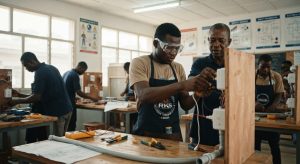
Major international frameworks are fundamentally altering this terrain:
- The “Youth Rising” Project: Supported by the European Union and implemented by UNIDO, this multi-million-dollar initiative modernizes infrastructure and introduces competency-based modular curricula across regional TVET institutions.
- The STRIVE Initiative: Funded by the Agence Française de Développement (AFD) and implemented by the IECD, the Strengthening Integration through Vocational Education (STRIVE) project works directly to ensure that student capabilities align directly with private-sector demands, moving training away from historical, static curriculums.
- The Liberia Industrial Opportunity Center (LOIC): Organizations like the LOIC Networkact as direct feeders into industrial sectors, equipping youth with hands-on trade capabilities in mechanics, plumbing, and carpentry.
By stepping up local capacity in heavy machinery, electrical programming, and advanced construction, Liberia shifts from a passive exporter of raw items to an active hub for value-addition and domestic manufacturing.
┌─────────────────────────────────────────────────────────────────┐
│ THE CYCLE OF TVET-DRIVEN TRANSFORMATION │
└─────────────────────────────────────────────────────────────────┘
│
▼
Targeted Skills Training (TVET)
│
▼
Increased Local Employability
│
▼
Attraction of Private & Foreign Investment
│
▼
Industrial Expansion & Tax Base Growth
│
▼
Long-Term Social & Regional Stability
3. Anchoring Social Stability and Youth Inclusion
A country where the vast majority of the youth population is underemployed or structurally locked out of the formal economy is a country vulnerable to social unrest. Idle human capital erodes social cohesion.
Vocational training offers an immediate, tangible path to economic dignity. By creating accessible, short-term and intermediate certified programs, institutions meet youth where they are—including those whose education was historically disrupted. When a young person transitions into becoming a certified welder, a hospitality professional, or a commercial farmer, they gain an immediate stake in the stability of their community.
Furthermore, modern TVET strategies prioritize inclusive outreach, explicitly drawing in women, at-risk youth, and individuals with disabilities. This inclusive economic integration converts a historical demographic risk into a powerful pillar of civic peace.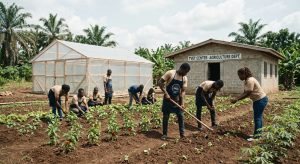
The Operational Challenge: Industry Realignment
Despite its immense promise, vocational training cannot succeed as an abstract concept. Historically, the country’s TVET sector suffered from fragmentation, outdated facilities, and a severe lack of qualified instructors.
To counter this, the government drastically increased its budget allocations for skills development, scaling funding to over US$1 million under the guidance of the Agricultural and Industrial Training Bureau (AITB).
To solve the trainer shortage, Liberia has even begun deploying cohorts of local technical professionals for advanced international training in countries like Kenya and Ghana.
Ultimately, the impact of these millions of dollars hinges entirely on demand-driven design. If institutions simply train youth in arbitrary fields based on historical habits, graduate unemployment will persist. True economic transformation requires systemic private-sector alignment—where industries help map out curricula, offer mandatory apprenticeships, and directly validate institutional standard testing.
Conclusion
Targeted, practical vocational training is not just an alternative educational track; it is the fundamental bedrock upon which Liberia’s future economic resilience and social peace must be built. By directly converting raw human potential into specialized, marketable capability, Liberia can successfully transition from an economy vulnerable to shocks to an assertive, self-sustaining industrial participant.
To fully realize this transition, the expansion of Technical and Vocational Education and Training (TVET) must be treated as an urgent national priority across all fifteen counties. Moving forward, this requires a strategic shift toward critical sectors like agriculture, where modernized, skills-based learning can bridge the gap between classroom theory and real-world economic output. Equipping educators with specialized training and upgrading local vocational centers will allow Liberia to build a sustainable, highly skilled workforce capable of driving food security and localized industrial growth.
Furthermore, anchoring the country’s youth in the formal economy is vital for maintaining long-term social stability. By combining decentralized vocational access with institutional frameworks that reward innovation, entrepreneurship, and technical excellence, Liberia can successfully steer its youthful population away from the vulnerabilities of underemployment and toward productive citizenship. Ultimately, the responsibility to foster this ecosystem is a shared mandate uniting the government, schools, and private enterprises. Investing heavily in practical, accessible capabilities today is the definitive mechanism by which Liberia will safeguard its economic sovereignty and secure a prosperous tomorrow.
The Author:
Mr. Edmund Zar-Zar Bargblor is a Liberian educator, author, and community leader known for his writings on African governance, education reform, and social justice. Education and Work: He has spent over 25 years working as an educator and public servant, focusing heavily on the evolution and reform of the Liberian educational system.
Writing and Essays: He is a frequent contributor of commentaries and articles addressing corruption, national reconciliation, and leadership in Liberia, published via platforms like the Liberian Observer.
Published Works: He authored the essay collection The Pen Has Power: Essays on Liberia and Africa’s Path Forward, which explores socio-political challenges and nation-building.
Awards: He was honored by the West Africa Intellectuals Award (WAIO) for his impactful writing on governance and anti-corruption efforts.
Community Leadership: Active in the diaspora, he has been involved with community organizations such as the Liberian community in Rhode and the African Catholic Community of Rhode Island.
The Author: Edmund Zar-Zar Bargblor

Mr. Edmund Zar-Zar Bargblor is a Liberian educator, author, and community leader known for his writings on African governance, education reform, and social justice.
Education and Work: He has spent over 25 years working as an educator and public servant, focusing heavily on the evolution and reform of the Liberian educational system.
Writing and Essays: He is a frequent contributor of commentaries and articles addressing corruption, national reconciliation, and leadership in Liberia, published via platforms like the Liberian Observer.
Published Works: He authored the essay collection The Pen Has Power: Essays on Liberia and Africa’s Path Forward, which explores socio-political challenges and nation-building.
Awards: He was honored by the West Africa Intellectuals Award (WAIO) for his impactful writing on governance and anti-corruption efforts.
Community Leadership: Active in the diaspora, he has been involved with community organizations such as the Liberian community in Rhode and the African Catholic Community of Rhode Island.