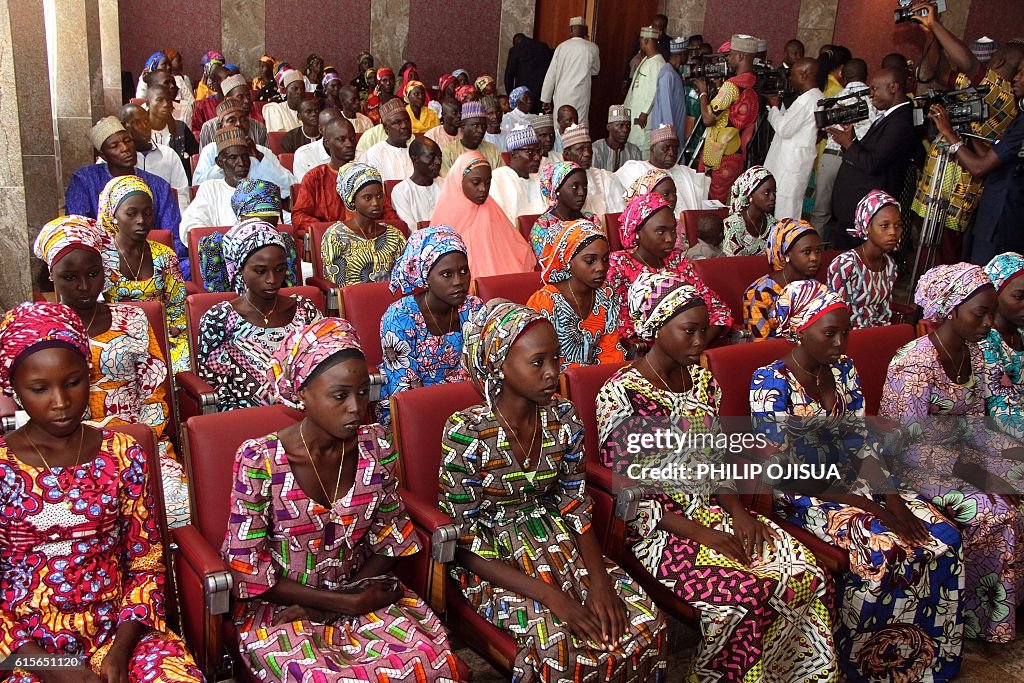

Since Boko Haram, an Islamic militant group, kidnapped 276 Nigerian girls from a secondary school in Borno State and drove them into the remote Sambisa forest in 2014, discussions about the role of Islam in Africa have resurfaced. The challenge of the 21st century for West Africa is radical Islam. Additionally, the Liberia Immigration Service (LIS) reported registering over 40,000 Burkinabé cocoa farmers to monitor and legalize their status (Frontpage, July 24, 2025). Radical Islam is not a new phenomenon in West Africa. Is Liberia prepared to confront the forces of radical Islam on its own soil?
An Islamist militant group is an armed organization that uses violence to pursue political goals rooted in a strict, fundamentalist interpretation of Islam. These groups typically seek to establish states governed by Sharia law, overthrow existing governments, and often advocate for a transnational “global jihad” to unite Muslims. Islamist extremism is a form of political extremism that posits the existence of a divinely ordained—and therefore absolute—order that overrides human-made systems. This term encompasses various currents and movements that differ in their ideological premises, geographic orientations, strategies, and means.
In 410 AD, the Roman Empire fell, leaving Europe in turmoil amid wars. During the same period (300–500 AD), West African empires were rising. Many European tribes, including the Vandals, Visigoths, and Jews, fled and settled in North Africa. Meanwhile, a pivotal development was underway that would reshape world history: by 700 AD, the Prophet Muhammad had his first revelation, leading to the spread of Islam through jihad. Islam reached Sudan around 700 AD. The first ethnic groups Muslims encountered in West Africa were the Mande along the Senegal River. The natives ceded an island in the middle of the river, where Muslims built a monastery to recruit and train converts for jihad. Many locals adopted the new religion, while African patriots like Kusaila and Kahina resisted fiercely to protect their homeland.
On the Songhai front, Muslims faced stiff resistance. Earlier, around 200 AD, Berbers had invaded and taken over Dendi. The Songhai people, determined to preserve their way of life, abandoned Dendi and built a new city called Kukya (a Kwa word meaning “wrapped in death”). New converts, often with superficial knowledge of Islam, became a destructive force. One such figure was Tarsina. In 1020, Tarsina embraced Islam as leader of the Lemtuna tribe and vowed to convert his entire tribe. He changed his name to Abdullah Abu Mohammed and, blending material ambitions with religious zeal, raided non-Muslim settlements. After Tarsina’s death, his son-in-law Yahia ibn Ibrahim succeeded him. A devout Muslim, Yahia made a pilgrimage to Mecca and returned with a teacher, Ibn Yasin, to instruct his people in the Quran.
Islam took root in West Africa, but adoption was often nominal. Frustrated, Ibn Yasin did not return home; instead, he, Yahia ibn Ibrahim, and Yahia’s brother Abu Bakr established a monastery on the Senegal River. The group became known as the Almoravids. Soon, the monastery had 1,000 converts. Having failed to gain mass conversions through persuasion, Ibn Yasin turned to violence and intimidation (Dr. J.C. deGraft-Johnson: Muslim Invasion of Africa).
In 1042, Ibn Yasin left the retreat and led his followers in a holy war against non-believers, destroying everything in their path. The Almoravids became masters of West African tribes. In 1056 AD, Yahia, the Almoravids’ commander-in-chief, died, and his brother Abu Bakr (named after the Prophet Muhammad’s confidant) took command.
In 1076 AD, Abu Bakr, leading Almoravid forces in alliance with the Mossi from Yatenga, attacked, dismantled, and looted West Africa’s early attempt at self-governance: the Ghana Empire. This destruction triggered mass migrations that affected every tribe and ethnic group in West Africa to this day. The first to flee into the rainforest were the Ashanti. Some scholars believe the Ashanti and Akan people in modern Ghana are 1,000 miles from their original homeland in the Ghana Empire. This pattern of mass migration persisted throughout history until colonialism. The history of West Africa is one of mass migration (African Glory: The Story of Vanished Negro Civilizations).
Maj. William Kwabiah of the Ghanaian military was correct when he wrote: “While in the past two decades, the region of West Africa has experienced various armed conflicts, a new security threat that has emerged is the growing threat of violence by radical Islamist groups. This phenomenon has assumed prominence in the aftermath of the 11 September 2001 attacks on the United States of America. Against the background of a politically unstable region, impoverished by poverty, disease, conflicts, and a high rate of illiteracy, a foothold by radical Islamist groups could destabilize the whole region. The recent escalation of violence perpetuated by radical Islamist groups in the northern parts of Nigeria and other countries poses a grave threat to the region as Nigeria is home to approximately half the population of the region. Some measures that governments, in concert with other stakeholders, can take include poverty alleviation measures, economic development of deprived areas, socio-political reforms, inter-faith dialogue and consultations, prevent institutionalization of Sharia law, promotion of good governance, and inter-governmental cooperation” (Maj. William Kwabiah: University College of Management Studies, Accra, Ghana, 1992).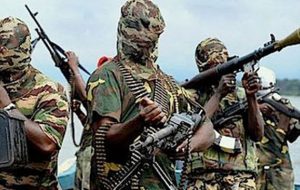
Countries neighboring Nigeria have an obligation to ensure their territories are not used by militant groups—whether Christian or Muslim—intent on destabilizing the Federal Republic of Nigeria. Nigeria’s stability is paramount to Africa’s, especially West Africa’s. West Africa’s history is unified; its people are interconnected, with interrelated and contiguous languages. Islam is not new to West Africa, but understanding it requires intellectually removing the colonial borders. Failing to do so risks viewing Nigeria’s issues as isolated, when they are regional.
Even from Smith Online Television, Philipbert Semogai Jabba-Wleh Browne wrote in “LIBERIA ON HIGH ALERT: THE LIFTING TIDE OF MUSLIM EXTREMISM IN WEST AFRICA”: “Liberia, a country known for its rich natural resources and cultural diversity, is facing a new threat: Muslim extremist groups operating in West Africa. Groups like Jama’at Nusrat al-Islam wal-Muslimin (JNIM) and the Islamic State in the Greater Sahara (ISGS) have been spreading their influence in countries like Mali, Burkina Faso, and Niger. If Liberia isn’t careful, it could become a victim of these extremist groups. These groups have a history of carrying out attacks on civilians, security forces, and critical infrastructure. They’ve also been known to recruit vulnerable youth, exploiting economic and social grievances to further their cause. Liberia’s porous borders and economic challenges make it an attractive target” (February 18, 2026, From Where I Sit).
“The alleged formation of ethnic-based security groups, like the National Fula Security of Liberia, could exacerbate tensions and create opportunities for extremist infiltration. The Liberian government needs to be vigilant and take proactive steps to prevent these groups from gaining a foothold” (SMITH Online Television ‘s Post).
Those of us in the diaspora have a concern: Is Liberia ready to overcome the forces of radical Islam whenever it surfaces on its soil?

THE AUTHOR: Mr. Edmund Zar-Zar Bargblor
- MR. Edmund Zar-Zar Bargblor is a distinguished Liberian educator, author, and public servant known for his work in mathematics education and his writings on African governance and social issues. Awards and Recognition: In March 2025, he received the West Africa Intellectuals Award from the West Africa Intellectual Organization (WAIO) in Accra, Ghana, for his articles on African governance, corruption, and economic development. He is a former Deputy Managing Director of the National Port Authority of Liberia.
Liberia’s National Budget An Instrument for National Development or National Destruction? By Frederick A.B. Jayweh, B.A, LL.B., LL.M

Spread the loveLiberia’s National Budget An Instrument for National Development or National…