
Yes indeed, failing to encourage women to take on political and business leadership roles significantly undermines Africa’s economic development. Research from global economic institutions consistently demonstrates that excluding women from decision-making limits productivity, stalls GDP growth, and wastes vast pools of talent.
The Economic Cost of the Gender Gap • Trillions in Lost GDP: According to the World Economic Forum, closing gender gaps across the continent could add roughly $2.5 trillion to Africa’s GDP. A separate study by McKinsey & Company noted that achieving regional gender parity could boost annual growth by 10%. •
The Productivity Drain:
Sub-Saharan Africa features the highest female entrepreneurship rate in the world at 26%. However, women-led businesses receive a tiny fraction of formal capital—facing an estimated $42 billion funding gap. Leaving these businesses small and underfunded artificially restricts market expansion and job creation.
Agricultural Inefficiency:
The World Bank points out that closing the gender productivity gap in agriculture alone—by securing equal access to land and financing for women—would automatically increase total African agricultural output by 19%.
How Leadership Accelerates Development Leadership Sector Impact on Economic Development Business Leadership Women in executive positions reshape corporate structures, open new consumer pathways, improve financial performance, and invest returns back into community health and education. Political Leadership When women secure seats in parliament, governments prioritize essential development infrastructure—such as improving drinking water access, implementing childcare, and reforming property rights. Historical and Modern Realities Historically, many pre-colonial African societies utilized shared power structures where women held high political, spiritual, and trade authorities.
The Resilience and Legacy of African Women Leaders
Historically, pre-colonial African societies frequently utilized shared power structures where women held high political, spiritual, and trade authority. From the Amina of Zazzau to the Queen Mothers of the Ashanti Kingdom, women were central to governance and wealth generation. The disruption of these structures during the colonial era often sidelined women, creating institutional gaps that modern African nations are still working to undo.
Today, when African women are empowered to lead, the economic returns are clear and measurable across multiple dimensions:
Direct Economic Impacts of Gender Parity
| Leadership Sector | Core Impact on Economic Development | Key Metric / Insight |
| Macro Economy | Drives GDP growth and closes regional wealth gaps by fully utilizing the workforce. | $2.5 trillion could be added to Africa’s GDP by closing the gender gap. |
| Business & Enterprise | Reshapes corporate structures, opens new consumer pathways, improves financial performance, and increases community reinvestment. | $42 billion funding gap currently restricts Africa’s 26% female entrepreneurship rate. |
| Agriculture | Optimizes food supply chains and boosts rural economies by securing equal access to land and financing. | 19% increase in total agricultural output by closing the productivity gap. |
| Political Governance | Prioritizes development infrastructure, such as clean water, public healthcare, childcare, and property rights reform. | Balanced policy making directly correlates with higher human capital indices. |
Key Barriers to Overcome
To unlock this full economic potential, African nations face the critical task of dismantling several systemic barriers:
- Financial Exclusion: Overcoming discriminatory lending practices to bridge the multi-billion-dollar credit gap for women entrepreneurs.
- Land Tenure Laws: Reforming traditional and legal frameworks to guarantee women equal land ownership and inheritance rights.
- Educational Pipelines: Investing in STEM and leadership training for young women to prepare them for executive and governance roles.
Interestingly, Rwanda and South Africa have successfully increased female representation in government.
GDP: According to the World Economic Forum, closing gender gaps across the continent could add roughly $2.5 trillion to Africa’s GDP. A separate study by McKinsey & Company noted that achieving regional gender parity could boost annual growth by 10%.
The Productivity Drain:
Sub-Saharan Africa features the highest female entrepreneurship rate in the world at 26%. However, women-led businesses receive a tiny fraction of formal capital—facing an estimated $42 billion funding gap. Leaving these businesses small and underfunded artificially restricts market expansion and job creation.
Agricultural Inefficiency:
The World Bank points out that closing the gender productivity gap in agriculture alone—by securing equal access to land and financing for women—would automatically increase total African agricultural output by 19%.
How Leadership Accelerates Development Leadership Sector Impact on Economic Development Business Leadership Women in executive positions reshape corporate structures, open new consumer pathways, improve financial performance, and invest returns back into community health and education.
Political Leadership When women secure seats in parliament, governments prioritize essential development infrastructure—such as improving drinking water access, implementing childcare, and reforming property rights.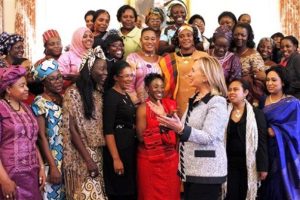
Historical and Modern Realities Historically, many pre-colonial African societies utilized shared power structures where women held high political, spiritual, and trade authorities.
The Resilience and Legacy of African Women Leaders Historically, pre-colonial African societies frequently utilized shared power structures where women held high political, spiritual, and trade authority. From the Amina of Zazzau to the Queen Mothers of the Ashanti Kingdom, women were central to governance and wealth generation.
The disruption of these structures during the colonial era often sidelined women, creating institutional gaps that modern African nations are still working to undo. Today, when African women are empowered to lead, the economic returns are clear and measurable across multiple dimensions:
Direct Economic Impacts of Gender Parity Leadership Sector Core Impact on Economic Development Key Metric / Insight Macro Economy Drives GDP growth and closes regional wealth gaps by fully utilizing the workforce. $2.5 trillion could be added to Africa’s GDP by closing the gender gap.
Business & Enterprise Reshapes corporate structures, opens new consumer pathways, improves financial performance, and increases community reinvestment. $42 billion funding gap currently restricts Africa’s 26% female entrepreneurship rate. Agriculture Optimizes food supply chains and boosts rural economies by securing equal access to land and financing. 19% increase in total agricultural output by closing the productivity gap. Political Governance Prioritizes development infrastructure, such as clean water, public healthcare, childcare, and property rights reform. Balanced policy making directly correlates with higher human capital indices.
Key Barriers to Overcome To unlock this full economic potential, African nations face the critical task of dismantling several systemic barriers: • Financial Exclusion: Overcoming discriminatory lending practices to bridge the multi-billion-dollar credit gap for women entrepreneurs. • Land Tenure Laws: Reforming traditional and legal frameworks to guarantee women equal land ownership and inheritance rights. • Educational Pipelines: Investing in STEM and leadership training for young women to prepare them for executive and governance roles. Would you like to explore specific case studies of African nations (like Rwanda or South Africa) that have successfully increased female representation in government?
Rwanda and South Africa serve as two of the continent’s most powerful case studies for how intentional legislative reform can rapidly accelerate female political leadership and drive national development.
Here is how both nations transformed their governing structures to close the political gender gap:
Rwanda: The Global Leader in Gender Representation
Following the 1994 genocide, Rwanda fundamentally rebuilt its institutional frameworks, placing women at the center of its national recovery and development strategy.
- The 30% Constitutional Quota: In 2003, Rwanda enacted a new constitution mandating that at least 30% of all parliamentary seats be reserved for women.
- Surpassing the Quota: Rather than treating 30% as a ceiling, political parties actively promoted female candidates in open, non-reserved seats. As a result, women routinely hold over 60% of seats in the Lower House of Parliament, making Rwanda the global leader in female legislative representation.
- Economic & Policy Outcomes: This high level of representation has directly translated into pioneering legislation, including landmark land inheritance laws that granted women equal rights to own property. This single reform dramatically unlocked access to bank loans and agricultural credit for female farmers.
South Africa: Party Quotas and Constitutional Mandates
South Africa’s transition to democracy in 1994 prioritized the intersection of racial and gender equality as core pillars of the new state.
- Voluntary Party Quotas: Unlike Rwanda’s constitutional mandate for parliament, South Africa’s transformation was driven largely by internal party rules. The ruling African National Congress (ANC) adopted a voluntary 50% gender quota for its candidate lists.
- Top-Tier Global Ranking: Because of these internal party policies, women consistently make up roughly 45% to 48% of South Africa’s National Assembly, positioning the country comfortably within the top 15 globally for gender parity in politics.
- Economic & Policy Outcomes: A gender-balanced parliament successfully drove the passage of the Choice on Termination of Pregnancy Act and heavily influenced national budgeting strategies to prioritize maternal healthcare, local child-support grants, and strict protections against gender-based violence.
Conclusion:
Excluding women from political and business leadership is an expensive economic drag that Africa cannot afford. The data from global financial institutions consistently demonstrates that gender inequality is not merely a social issue, but a profound macroeconomic constraint. Failing to integrate women into decision-making structures artificially restricts GDP growth, leaves vital industries like agriculture underproductive, and locks away billions of dollars in entrepreneurial potential.
Conversely, structural inclusion acts as an economic multiplier. When African women assume leadership, the benefits ripple across the entire society:
- In business, female leaders diversify markets, drive corporate financial performance, and systematically reinvest profits back into family education and community health.
- In politics, female lawmakers champion the foundational infrastructure—such as property rights, clean water access, and healthcare—that builds robust human capital and long-term national stability.
The historical legacy of pre-colonial shared power structures shows that female leadership is deeply rooted in the continent’s history. Modern success stories like Rwanda and South Africa prove that when nations use intentional policy frameworks to dismantle systemic barriers, progress accelerates rapidly. For Africa to achieve its full economic potential and sustain its modern development goals, the full empowerment of women in both boardrooms and parliaments is not an optional milestone—it is an absolute economic necessity.
The Author:
Edmund Zar-Zar Bargblor, Sr. is a prominent Liberian writer, educator, author, and community leader.
The Author: Edmund Zar-Zar Bargblor

Mr. Edmund Zar-Zar Bargblor is a Liberian educator, author, and community leader known for his writings on African governance, education reform, and social justice.
Education and Work: He has spent over 25 years working as an educator and public servant, focusing heavily on the evolution and reform of the Liberian educational system.
Writing and Essays: He is a frequent contributor of commentaries and articles addressing corruption, national reconciliation, and leadership in Liberia, published via platforms like the Liberian Observer.
Published Works: He authored the essay collection The Pen Has Power: Essays on Liberia and Africa’s Path Forward, which explores socio-political challenges and nation-building.
Awards: He was honored by the West Africa Intellectuals Award (WAIO) for his impactful writing on governance and anti-corruption efforts.
Community Leadership: Active in the diaspora, he has been involved with community organizations such as the Liberian community in Rhode and the African Catholic Community of Rhode Island.