Tires, Steel, and Sovereignty: Why Domestic Processing is the Key to Liberian Development By Edmund Zar-Zar Bargblor
The processing of Liberian raw resource materials is absolutely essential for the country’s national economic development. For decades, Liberia has relied on an extractive economic model—often termed a “dual economy”—where foreign concessions export primary commodities in their raw states, leaving the domestic economy vulnerable and underdeveloped. Shifting toward domestic value addition is not just an elective policy choice; it is an economic imperative for sustainable growth.
From Extraction to Value Addition: The Key to Liberia’s Economic Transformation
Liberia is a nation blessed with an abundance of natural wealth, including vast reserves of iron ore, rich rubber plantations, fertile agricultural land, gold, diamonds, and extensive timber forests. Yet, despite these resources, the country has historically grappled with high poverty rates, infrastructure deficits, and economic instability. The root of this paradox lies in the reliance on raw commodity exports. To achieve true national economic development, Liberia must transition from being a mere exporter of raw materials to a hub for domestic processing and manufacturing.
- Breaking the Resource Curse and Commodity Volatility
Relying entirely on raw resource exports exposes Liberia to the harsh realities of global commodity price shocks. When global market prices for iron ore or rubber crash, the Liberian national budget and GDP suffer immediate, catastrophic contractions.
- Economic Stabilization: Domestic processing transforms these volatile raw assets into semi-finished or finished goods (such as steel components or manufactured rubber goods), which command stable, higher-value prices on the global market.
- Diversification: Building processing plants forces the economy to diversify, reducing dangerous over-reliance on a single extractive sector.
- Mass Job Creation and Human Capital Development
The extraction of raw materials—especially in modern mining—is highly capital-intensive but relatively low on domestic labor absorption. Once the infrastructure is built, mines employ comparatively few local workers, often restricting them to low-skilled labor.
- Expanding the Job Market: Industrial processing factories require a massive, tiered workforce, including factory operators, technicians, engineers, logistics experts, and managers.
- Skill Upgrading: Establishing processing industries incentivizes technical and vocational education and training (TVET). This elevates the overall skill level of the Liberian workforce, shifting livelihoods from subsistence farming and informal labor to formal, high-paying manufacturing jobs.
- Retaining Wealth Through the “Value-Added” Multiplier
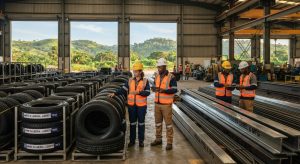

When Liberia exports raw latex and imports finished vehicle tires, or exports iron ore and imports structural steel, it is effectively exporting Liberian capital and importing foreign labor.
- Multiplier Effect: Processing raw materials locally ensures that the highest profit margins stay within the country.
- Infrastructure Incentives: Industrial processing facilities require reliable electricity, roads, and ports. The push for processing naturally drives investments into critical public utilities—such as expanding the grid or developing green energy like the Mount Coffee Hydroelectric Plant—which benefits all sectors of society.
4. Boosting Government Revenue and Trade Balances
Value-added goods fetch significantly higher prices than raw materials, fundamentally altering Liberia’s macroeconomic health.
- Favorable Balance of Trade: Exporting high-value processed goods dramatically improves the national balance of trade, reducing chronic trade deficits and strengthening the Liberian Dollar.
- Broader Tax Base: A robust manufacturing sector expands the government’s internal revenue generation through corporate taxes, payroll taxes from formal employment, and customs duties, reducing Liberia’s long-standing dependency on foreign aid.
A Comparative Look at Key Liberian Resources
| Resource | Historical/Current Raw State Export | Potential Processed/Value-Added State | Economic Impact of Local Processing |
| Rubber | Raw latex, unsmoked sheets | Tires, medical gloves, footwear, adhesives | Revitalizes the manufacturing sector; taps into West African automotive supply chains. |
| Iron Ore | Raw iron ore concentrate | Pellets, billets, structural steel, rebar | Drastically lowers domestic construction costs; fuels regional infrastructure boom. |
| Timber | Raw logs, roundwood | Sawn timber, furniture, plywood, paper pulp | Halts capital flight from luxury wood exports; creates high-skill artisanal and industrial jobs. |
| Agriculture (Oil Palm/Cocoa) | Raw palm oil, raw cocoa beans | Refined cooking oil, soaps, cosmetics, chocolate | Promotes food security; integrates smallholder farmers into lucrative global retail chains. |
The Path Forward: Overcoming the Bottlenecks
While essential, achieving a processed-based economy requires intentional, strategic state action. Liberia cannot build factories without addressing its foundational structural hurdles:
- The Energy Deficit: Manufacturing is impossible without cheap, uninterrupted electricity. Prioritizing affordable energy infrastructure is the first domino that must fall.
- Policy and Regulatory Frameworks: The government must enforce legal frameworks, such as the Investment Incentives Act, ensuring foreign concession agreements include explicit clauses for mandatory, phased local processing.
- Regional Integration: By processing its goods, Liberia can strategically position itself to exploit the African Continental Free Trade Area (AfCFTA), exporting manufactured goods duty-free to a market of 1.3 billion consumers.
Conclusion
Liberia stands at a critical macroeconomic crossroads, possessing vast natural wealth yet remaining trapped in a low-value extraction cycle. For over a century, the nation has functioned as a primary commodity exporter, shipping raw latex and iron ore to foreign markets while importing 100% of its high-value finished goods, such as vehicle tires and structural steel. This structural imbalance leaves the Liberian economy highly vulnerable to global price shocks, drains foreign exchange reserves, and exports high-paying manufacturing jobs.
Processing iron ore domestically at Putu Mountain in Grand Gedeh County for example, is essential to maximize Liberia’s economic return, create skilled jobs, and break the traditional cycle of raw resource extraction.
For over 15 years, Putu Mountain—holding between 2.37 billion and 3 billion tons of undeveloped iron ore—has remained dormant due to ownership disputes and financing hurdles. As renewed development plans emerge in 2026, shifting from raw exportation to local value addition is central to unlocking the project’s full national potential.
This systemic reliance on foreign manufacturing creates a “resource curse” that undercuts national development. When global commodity prices fluctuate, the Liberian national budget suffers immediate shocks, while the continuous outflow of capital to purchase foreign-made goods exerts constant downward pressure on the Liberian Dollar. Furthermore, exporting raw materials effectively means exporting prosperity—sending the most lucrative portions of the value chain, along with the jobs, technical expertise, and tax revenues they generate, to overseas processors.
Liberia cannot export its way to wealth through raw commodities alone. To build a resilient, independent future, the nation must shift its economic paradigm toward domestic processing. Turning Liberian latex into tires and Liberian iron into steel is not merely an industrial strategy; it is a vital imperative for reclaiming national sovereignty, securing infrastructure autonomy, and delivering tangible economic prosperity to the citizens of Liberia.
It was reported that President Joseph Nyuma Boakai affirmed that Liberia must stop exporting raw gold and begin adding value to its natural resources at home.
The leader of Liberia, His Excellency President Boakai, at the Liberia International Mining and Energy Conference at the Farmington Hotel in Margibi County, said that : “a local gold refinery could create employment opportunities, strengthen the economy, and ensure Liberians benefit more from the country’s mineral wealth” ( The Costa Show).
The processing of raw resource materials is not merely an optional strategy for Liberia—it is the definitive bridge from economic vulnerability to sustainable prosperity. By transforming its natural bounty into manufactured wealth, Liberia can create jobs for its youthful population, shield its budget from global shocks, and secure its rightful place as an economic powerhouse in West Africa.
The Author: Mr. Edmund Zar-Zar Bargblor


MR. Edmund Zar-Zar Bargblor is a distinguished Liberian educator, author, and public servant known for his work in mathematics education and his writings on African governance and social issues. Awards and Recognition: In March 2025, he received the West Africa Intellectuals Award from the West Africa Intellectual Organization (WAIO) in Accra, Ghana, for his articles on African governance, corruption, and economic development. He is a former Deputy Managing Director of the National Port Authority of Liberia.